Category:
Product Design
Client:
Arc Studio
Duration:
5 – 6 Weeks
Location:
Amsterdam, Netherlands
This project is included because it represents the intersection of product design, emerging health technology, and real-world impact. The work centred on translating complex medical capability into something understandable and usable outside of clinical environments. It reflects an ongoing interest in designing systems where accuracy, trust, and accessibility must coexist, and where design decisions directly influence user confidence and adoption.
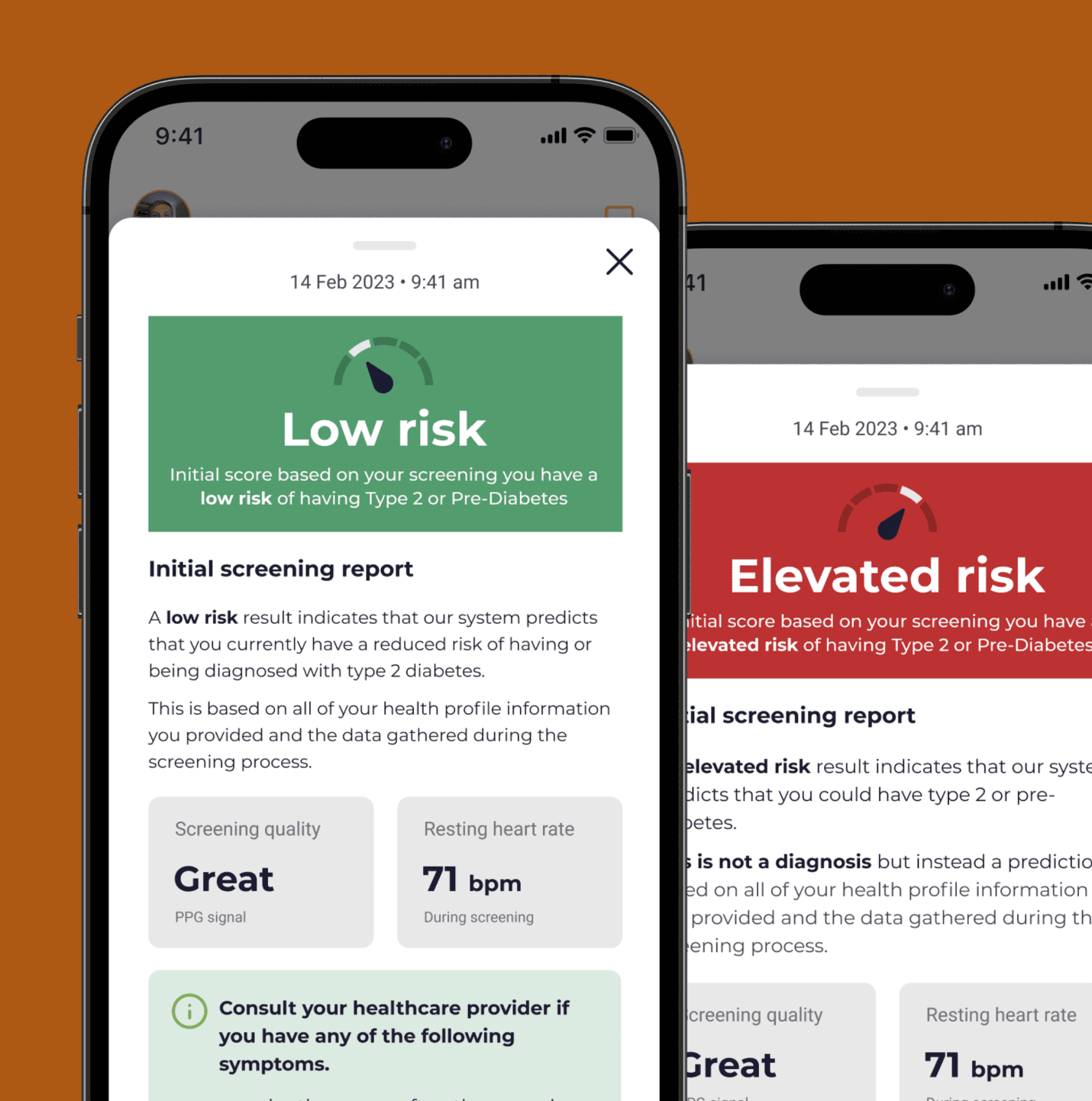
GlucoPath focused on applying non-invasive screening technology to the early detection of Type 2 diabetes risk, transforming a smartphone into a potential entry point for preventative healthcare. The underlying technology used optical sensing through the camera to analyse physiological signals, producing a risk assessment in under a minute. While the technical capability already existed, the challenge lay in making the experience credible and comprehensible to users who were being presented with health information that could carry significant personal weight. The design work centred on communicating outcomes responsibly, ensuring results were clear without being alarming, and guiding users toward next steps without implying diagnosis. Alongside the consumer experience, the product also needed to support insurers and wellness providers, requiring a system that could scale across individual use and organisational deployment.
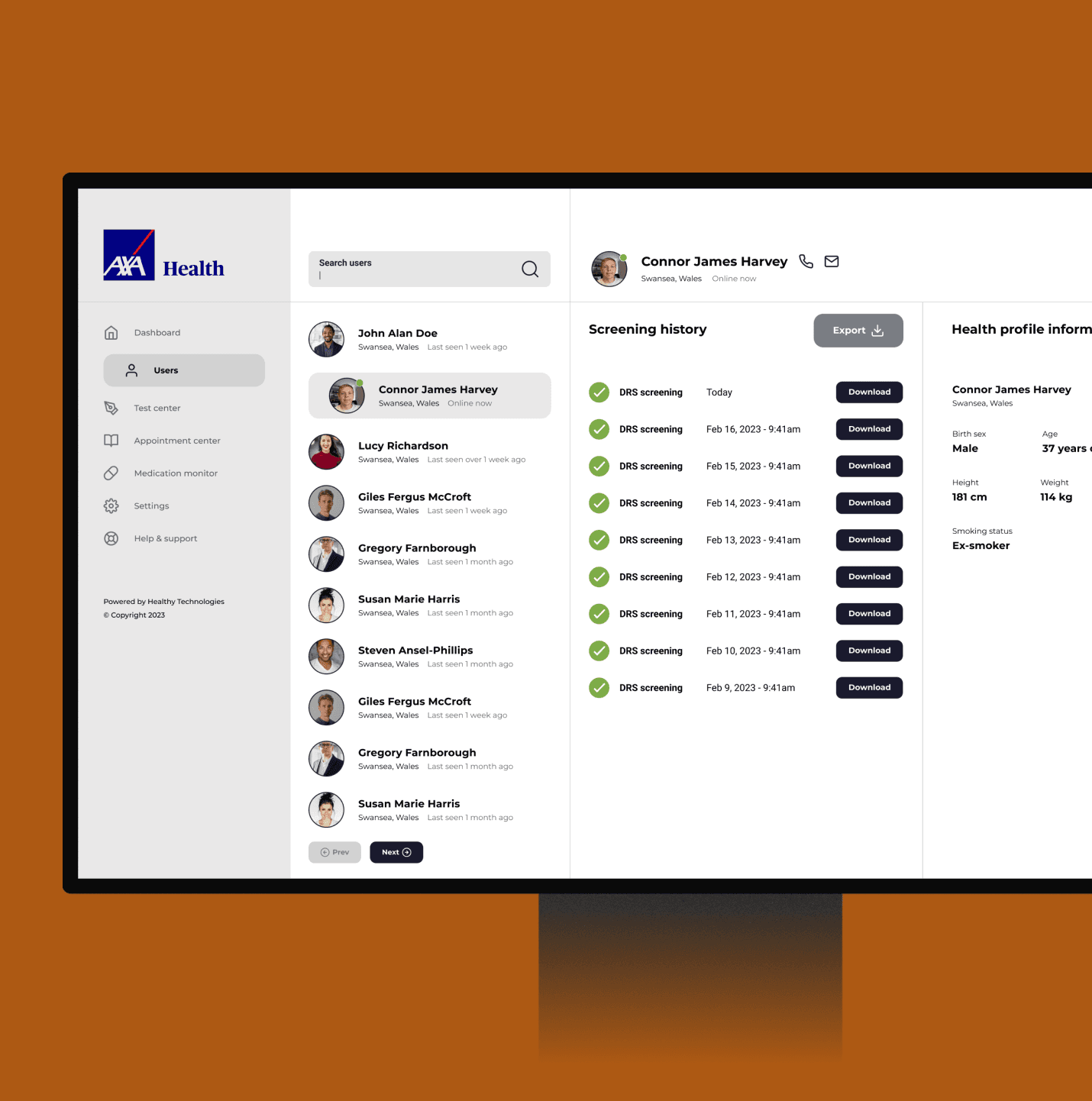
Research and early workshops focused on understanding both user and business contexts, mapping motivations, anxieties, and decision points across patients, providers, and insurers. The experience needed to reduce friction in onboarding while maintaining a sense of legitimacy and care appropriate to a health setting. Interaction patterns were designed to support reassurance through transparency, explaining what was being measured and why, while avoiding unnecessary technical detail. Prototyping played a central role in testing how risk information should be presented visually and linguistically, balancing simplicity with medical responsibility. In parallel, a centralised dashboard and demonstration environment were developed to support adoption conversations with partners and stakeholders, helping translate technical capability into tangible product value.

The outcome demonstrated how mobile technology could lower barriers to early health screening while supporting broader preventative care initiatives. Beyond the product itself, the project reinforced a consistent approach that continues to shape later work: start with the consequences of the information being presented, design for trust before efficiency, and ensure complex systems remain understandable to the people relying on them.