Category:
Co-founder & Principal Product Designer
Client:
Lucent Inc.
Duration:
8 – 9 Weeks
Location:
Tokyo, Japan
This project is included because it represents a move into applying emerging technology to reshape an established process rather than simply improving an interface around it. The focus was on questioning long-accepted friction in a specialist market and exploring how software could reduce cost, risk, and uncertainty without removing trust. It reflects a continued interest in using technology to make expert systems more accessible to a wider audience.

The traditional trading card grading process is slow, expensive, and heavily dependent on physical handling and subjective assessment. Collectors are required to ship valuable assets to grading companies, often waiting months for results, while inconsistencies between grading standards create uncertainty around value and authenticity. The opportunity was to rethink this process through software, using computer vision, colour analysis, and a bespoke AI approach to transform a smartphone into a viable grading tool. By allowing users to capture the front and back of a card and receive consistent pre-grading remotely, the experience reduced both the financial and emotional friction involved in participating in the market. The challenge was not only technical accuracy, but ensuring that users trusted a digital interpretation of a process traditionally performed by experts and physical inspection.
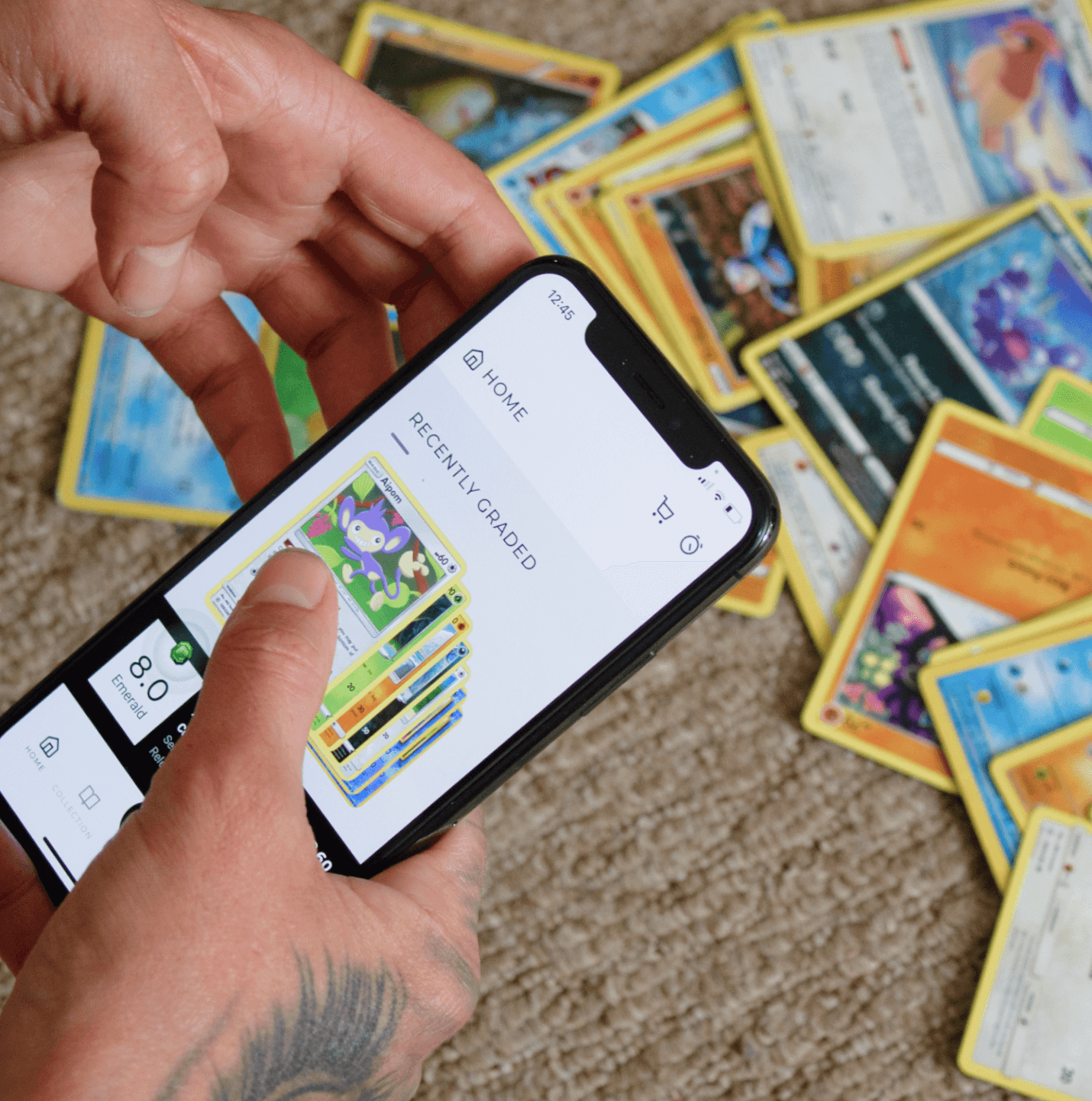
Designing the experience required balancing precision with approachability. The underlying analysis was complex, but the interaction needed to feel simple and repeatable for collectors of varying experience levels. Camera guidance, capture validation, and feedback loops were designed to help users produce reliable inputs while maintaining momentum through the flow. Features such as the augmented reality Digital Slab extended the experience beyond grading, allowing collectors to visualise and share assets digitally while reinforcing provenance and authenticity. This helped position the product not only as a tool, but as part of a broader ecosystem around collecting and ownership.

The outcome demonstrated how computer vision and AI could be applied to modernise a niche but valuable process without alienating an established community. Beyond the product itself, the work reinforced an approach that continues to inform later projects: start by understanding where friction exists in real-world behaviour, use technology to reduce that friction responsibly, and design experiences that make advanced capability feel natural rather than technical.