Category:
Product & HMI Design
Client:
Dyson
Duration:
26 Weeks
Location:
Malmesbury
This project is included because it represents a shift from designing individual interfaces to defining systems that scale across products and contexts. The work focused less on single screens and more on creating coherence between hardware, software, and data. It reflects an early point where design responsibility extended into shaping how a product behaves as a whole, not just how it looks.
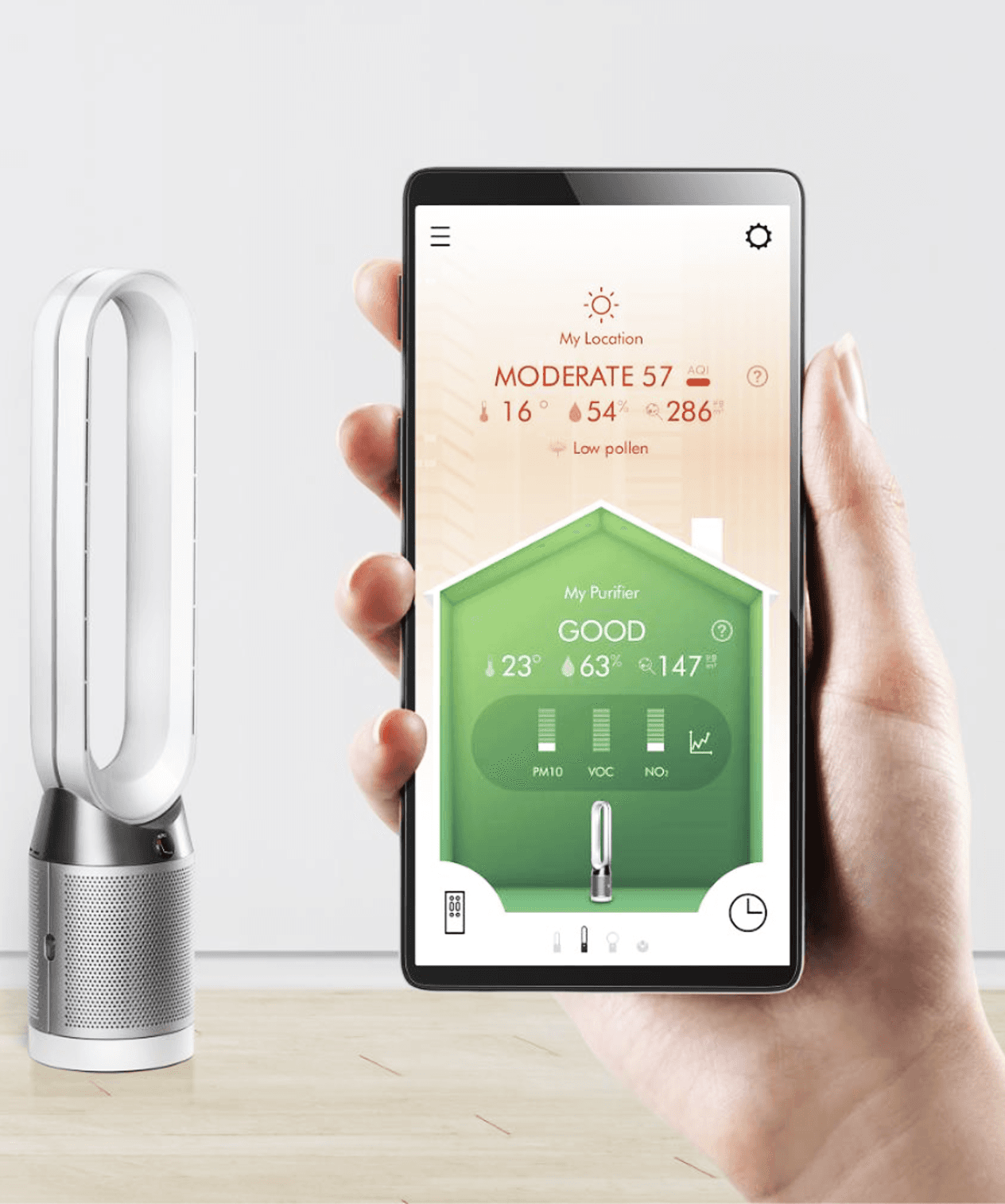
The Dyson Air Treatment work centred on defining a visual and interaction language for a new category of connected products, where physical devices, embedded displays, and mobile applications all needed to communicate the same information in different environments. The challenge was not simply aesthetic consistency, but clarity under constraint. The onboard displays operated with limited performance and resolution, were often viewed at distance, and existed in environments where lighting and placement could not be controlled. At the same time, the underlying data was complex, real-time, and unfamiliar to many users. The task became translating environmental data into something immediately understandable, ensuring that users could recognise both current conditions and machine behaviour at a glance. This required close collaboration across hardware, software, and engineering teams to ensure the experience remained coherent regardless of where the information appeared.
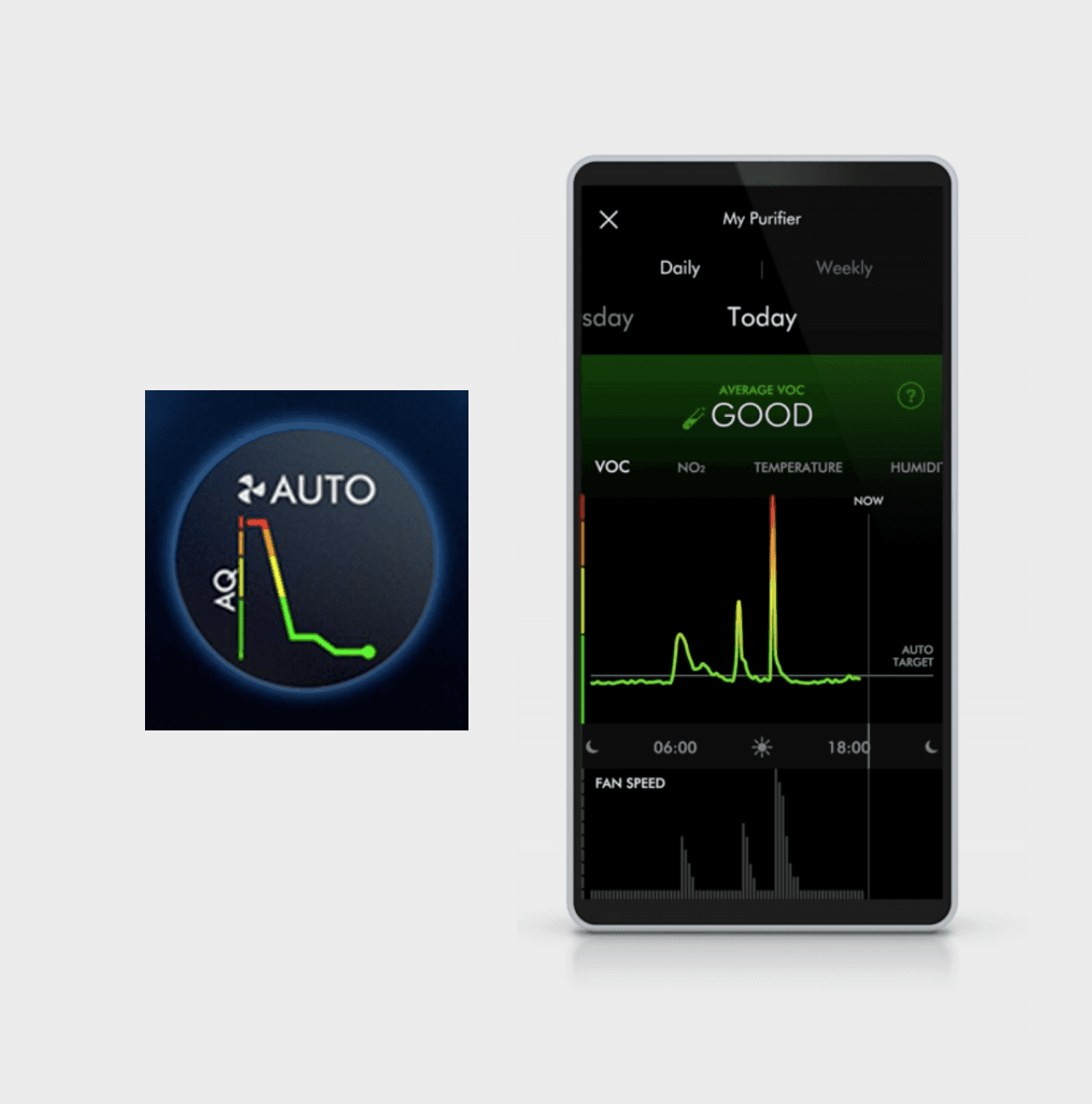
As prototypes evolved, it became clear that the interface needed to move beyond traditional dashboard thinking. Inspiration came from interaction models where information adapts to intent, allowing users to quickly understand what the machine was doing without navigating layers of controls. The resulting design language balanced clarity and responsiveness, allowing changes in air quality or machine state to be reflected visually in ways that felt intuitive rather than technical. Prototyping played a central role in validating these ideas, using rapid iterations to test legibility, motion, and comprehension across both embedded screens and mobile interfaces. The outcome was a system that allowed complex environmental data to feel accessible, while maintaining alignment with Dyson’s product philosophy of engineering-led simplicity.
The delivery phase focused on translating the work into a usable design system that could scale beyond a single product. This included creating component libraries, interaction guidelines, and internal documentation to support ongoing development across teams and future releases. The project reinforced an approach that continues to shape my work: designing for ecosystems rather than surfaces, using prototyping to align disciplines early, and ensuring that complexity is absorbed by the system so the user experiences something simple.